
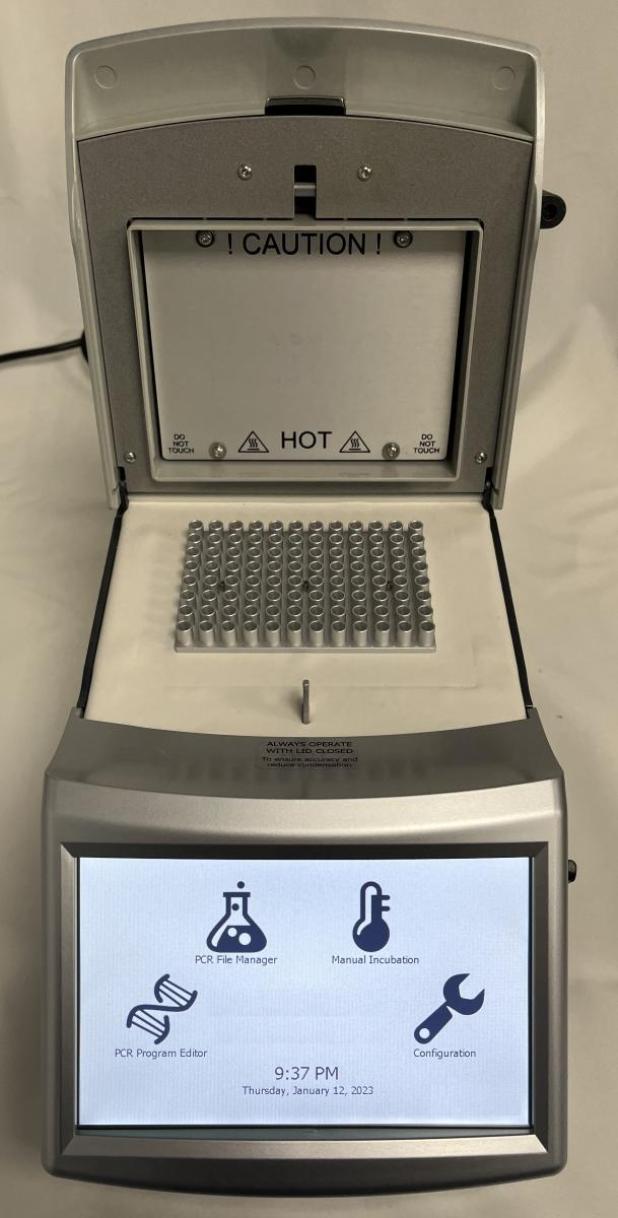
Reverse transcription PCR (RT-PCR) remains the gold standard for RNA detection, but its performance is often compromised by inhibitors present in crude biological and environmental samples. Components such as hemoglobin, humic acid, plant polysaccharides, fats, proteins, and food-derived compounds can reduce sensitivity or completely inhibit amplification, making nucleic acid purification a routine but time-consuming prerequisite.
A single amino acid substitution in Taq DNA polymerase, D732N, offers a fundamentally different approach.
A Single Mutation Enables Dual Function
The D732N mutation replaces aspartic acid with asparagine at residue 732. This substitution confers intrinsic reverse transcriptase activity while preserving the enzyme's DNA polymerase function.
Unlike conventional RT-PCR, which requires separate reverse transcriptase and DNA polymerase enzymes, the D732N mutant performs both cDNA synthesis and PCR amplification in a single reaction. The enzyme also remains active at temperatures up to 68°C, improving primer specificity and reducing problems associated with RNA secondary structure.
This mutation forms the basis of OmniTaq 2, the first commercial Taq polymerase incorporating the D732N substitution.
Improved Speed and Inhibitor Tolerance
In addition to its dual functionality, D732N exhibits substantially higher processivity than wild-type Taq polymerase. Under optimized conditions, OmniTaq 2 can amplify a 1 kb target using approximately 9-second extension times, whereas wild-type Taq typically requires about 30 seconds.
The mutant also demonstrates exceptional tolerance to PCR inhibitors, particularly when used with PCR Enhancement Cocktail (PEC). Reliable amplification has been demonstrated from inhibitor-rich samples, including whole blood, serum, plasma, soil, food matrices such as cocoa and black pepper, and crude environmental specimens. This capability minimizes or eliminates the need for nucleic acid purification, simplifying workflows while reducing turnaround time and contamination risk.
Implications for Molecular Diagnostics
The combination of reverse transcriptase activity, rapid DNA synthesis, and inhibitor resistance makes the D732N mutant well suited for applications requiring direct analysis of crude samples, including infectious disease diagnostics, food safety testing, veterinary diagnostics, environmental monitoring, and point-of-care molecular assays. It is also compatible with both RT-PCR and RT-LAMP workflows.
Conclusion
The D732N mutation (OmniTaq 2) illustrates how a single amino acid substitution can significantly expand the functionality of Taq DNA polymerase. By combining reverse transcription, rapid amplification, and enhanced inhibitor resistance in a single thermostable enzyme, D732N provides a practical platform for simplified, high-performance RT-PCR directly from challenging sample matrices, reducing both assay complexity and sample preparation requirements.